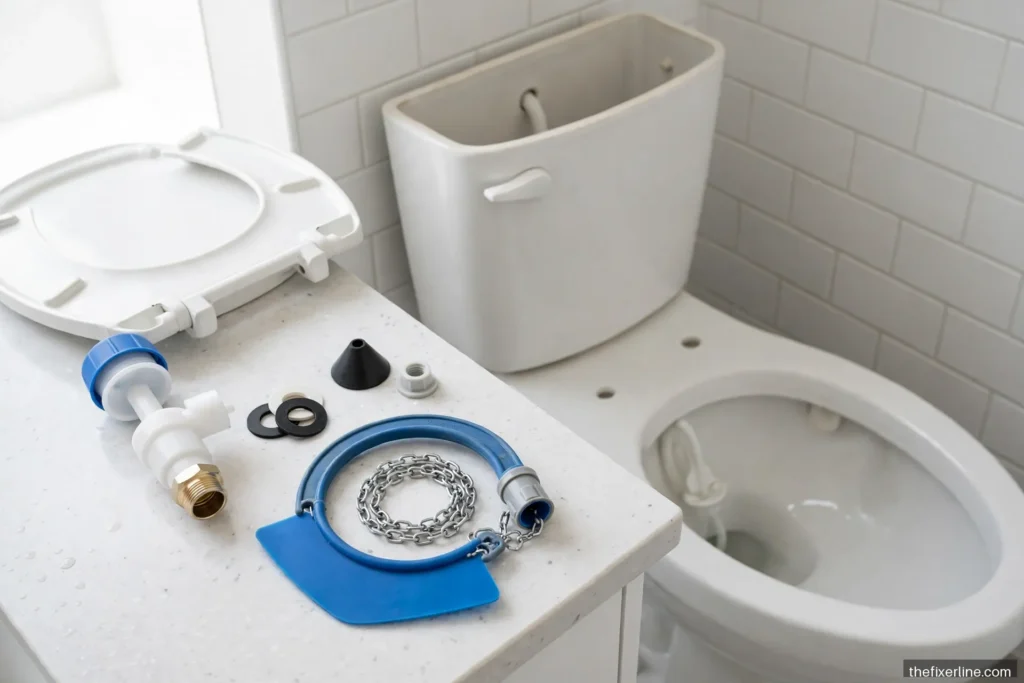
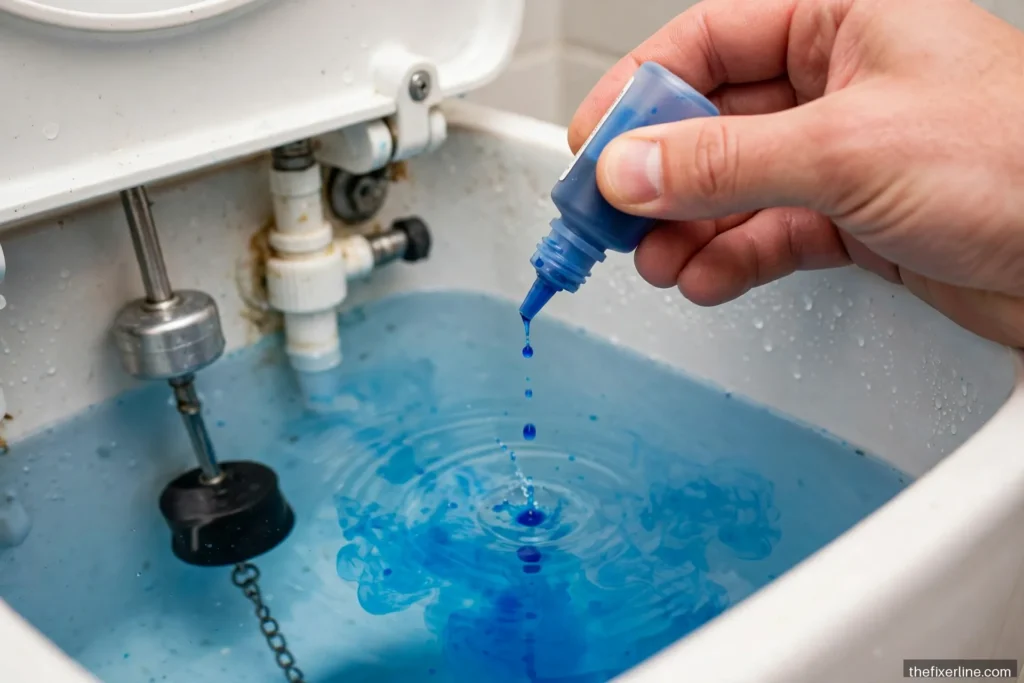
A clogged toilet is one of the most common — and most stressful — household problems, but most clogs are fixed in under 15 minutes with a plunger and no plumber. The key is using the right plunger (a flange plunger, not the flat cup type made for sinks) and plunging with a proper seal. If the plunger doesn’t work, a closet auger clears almost every clog that remains. Only call a plumber if several fixtures back up at once, the toilet overflows repeatedly, or the auger can’t clear it.
Key Takeaways
- Most toilet clogs clear with a flange plunger in 5 to 10 firm plunges.
- Never pour chemical drain cleaner into a toilet — it can crack porcelain and burn skin.
- A closet auger (about $25–$40) clears roughly 9 out of 10 clogs a plunger can’t.
- If water backs up in the tub or shower too, the problem is in the main drain — call a plumber.
What Causes a Toilet to Clog?
Toilets clog when something blocks the trap — the S-shaped channel inside the base — or the drain pipe just beyond it. The most common culprit is simply too much toilet paper in a single flush, especially thick or multi-ply paper. “Flushable” wipes are the next biggest cause: despite the label, they don’t break down like toilet paper and they snag in the trap. Cotton balls, cotton swabs, dental floss, feminine hygiene products, and paper towels should never be flushed either.
Low-flow toilets made before the mid-1990s are also more clog-prone, because they use less water to push waste through the same trap. Mineral buildup from hard water can narrow the rim jets and trap over years, weakening each flush. And in homes with small children, the cause is often a toy, a crayon, or a small object dropped in the bowl. If your toilet clogs every few weeks with no obvious cause, there is usually a partial clog or a narrowed passage that needs a deeper fix — not just another round of plunging.
What You’ll Need
You probably own most of this already. Buy the flange plunger before you need it, not during an emergency.
| Tool or material | What it does | Typical cost |
|---|---|---|
| Flange plunger | Seals the toilet drain so plunging actually moves water | $8–$15 |
| Rubber gloves | Keeps hands clean and protected | $3–$5 |
| Old towels | Catches splashes and protects the floor | Already at home |
| Bucket | Removes excess water from the bowl | $3–$8 |
| Dish soap | Lubricates the clog so it slides free | Already at home |
| Closet auger (3 ft) | Reaches clogs a plunger can’t move | $25–$40 |
| Hot tap water | Softens paper clogs when combined with soap | Free |
A flange plunger has a soft rubber flap that extends from the cup and fits into the toilet drain opening. That flap is what makes the difference — a standard cup plunger made for sinks cannot seal a toilet drain, which is why so many people plunge for ten minutes with no result.
Before You Start: Stop the Water and Protect the Floor
First, do not flush again. A second flush is how a slow drain becomes an overflowing bowl. If the water level is already high, scoop some out into a bucket until the bowl is about half full — this gives you room to plunge without splashing water over the rim.
Next, turn off the water supply. The shut-off valve is on the wall or floor behind the toilet, near the base. Turn it clockwise until it stops. This guarantees the tank can’t refill and overflow while you work. If the valve is stuck or missing, lift the tank lid and push the flapper down, or prop the float up — either stops water flowing into the bowl.
Lay old towels around the base of the toilet. Even a careful plunging job splashes a little, and toilet water on a bathroom floor is a hygiene problem you don’t want to spread through the house. Put on your rubber gloves and you’re ready.
Step-by-Step: How to Unclog a Toilet
Work through these steps in order. Most clogs clear at Step 2.
Step 1 — Check the Water Level and Shut Off the Supply
Confirm the supply valve behind the toilet is closed and the bowl is about half full. If the bowl is nearly empty, add a gallon of hot tap water — the plunger needs water in the bowl to create pressure. Never use boiling water: water straight off the boil can crack porcelain. Hot water from the tap is plenty.
Step 2 — Plunge the Right Way
Push the flange of the plunger into the drain opening and press down slowly first, so the cup fills with water and no air is trapped. Then plunge vigorously — push down hard and pull up sharply — for 15 to 20 seconds, keeping the seal against the drain the whole time. The pulling motion matters as much as the pushing: the back-and-forth pressure is what breaks the clog apart.
After 15 to 20 seconds, pull the plunger away sharply and watch the water level. If it drops, the clog is breaking up — flush once to test it. If nothing changes, repeat the cycle three or four times. Many clogs clear on the second or third round, once the paper has softened. If the water still won’t move after four solid rounds, move on to the next step instead of plunging for another half hour.
Step 3 — Try Hot Water and Dish Soap
Pour about a quarter cup of dish soap into the bowl, then add a gallon of hot (not boiling) tap water from a bucket, poured from waist height so the force helps push the clog. Wait 15 to 20 minutes. The soap lubricates the passage and the hot water softens the paper. Then plunge again for 15 seconds. This combination clears many paper clogs that a dry plunge alone can’t shift.
Step 4 — Use a Closet Auger
If the plunger and soap haven’t worked, the clog is probably lodged deeper in the trap. A closet auger — also called a toilet snake — is a 3-foot cable inside a tube, designed to reach into the trap without scratching the porcelain. Feed the cable into the drain, crank the handle clockwise while pushing gently, and you’ll feel resistance when the cable meets the clog. Keep cranking and pushing until the resistance gives way, then pull the cable back slowly. Flush to test. A closet auger costs $25–$40 at any hardware store and clears roughly 9 out of 10 clogs that defeat a plunger.
Step 5 — Test With a Careful Flush
Once the water drains normally, turn the supply valve back on and let the tank refill. Flush once and watch: the water should swirl down quickly and refill to its normal level. Flush a second time to be sure. If the bowl drains slowly even after the clog clears, there may be a partial blockage further down the line, or mineral buildup narrowing the trap — worth a second auger pass, and a plumber if it keeps happening.
What NOT to Do When Your Toilet Clogs
Chemical drain cleaners are the biggest mistake. Products like Drano are made for sink and tub drains, not toilets. The caustic chemicals sit in the bowl, can crack porcelain, generate heat, and splash up and burn skin. Worse, if a plumber later has to work on the toilet, they’re dealing with a bowl full of corrosive liquid. Skip them entirely.
Don’t flush repeatedly hoping the clog will clear — each flush adds a tankful of water to a bowl that can’t drain. Don’t use a wire coat hanger to poke at the clog; the bare metal scratches the porcelain glaze, and those scratches trap waste and make future clogs more likely. And don’t use a standard cup plunger from the sink: without the flange it can’t seal the drain, so all your effort goes into moving air, not water.
How Much Does It Cost to Fix a Clogged Toilet?
Most clogs cost almost nothing to fix yourself. Here’s how the options compare:
| Fix | Typical cost | When it applies |
|---|---|---|
| DIY with a plunger you own | $0 | Most clogs |
| Buy a flange plunger + gloves | $11–$20 | First time you need one |
| Buy a closet auger | $25–$40 | Plunger didn’t work |
| Standard plumber visit | $100–$250 (average ~$150) | Auger failed, or you prefer a pro |
| Emergency / after-hours plumber | $200–$400 | Nights, weekends, holidays |
| Toilet removal and reset | $250–$450 | Clog is lodged beyond the trap |
A worked example: a $12 flange plunger and a $5 pair of gloves costs $17 total and lasts for years. The average standard plumber visit for a clog is about $150. Fixing one clog yourself saves roughly $133 — and the plunger is still there for the next one. Even if you end up buying the auger too, you’re at about $55, still well under a single plumber visit.
When to Call a Plumber
Some situations are beyond a plunger and an auger. Call a plumber if water backs up in the bathtub or shower when you flush — that points to a blockage in the main drain, not the toilet. Call one if the toilet overflows repeatedly, if you smell sewage, or if the auger meets a hard object you suspect is a toy or something solid lodged in the trap. A toilet that clogs every week or two despite careful use usually has a deeper problem: a partially blocked vent stack, a sagging drain line, or a trap narrowed by mineral scale.
This is also the right call when there’s a safety angle. If the toilet is on an upper floor and water is leaking through the ceiling below, shut off the supply and call a pro — water damage gets expensive fast. And if the toilet needs to be removed to reach the clog, that’s a two-person job involving a wax ring, a heavy porcelain fixture, and a real risk of a leak if the seal isn’t set right. A plumber does it in under an hour.
How to Prevent Toilet Clogs
Prevention is mostly habit. Use less toilet paper per flush — flush twice for a heavy load rather than forcing it all through at once. Flush only human waste and toilet paper, nothing else, and keep a small wastebasket next to the toilet so wipes, cotton, and floss have somewhere obvious to go. Teach children that the toilet is not a place for toys.
Check your flush strength once a year: if the bowl drains sluggishly even with no clog, clean the rim jets under the bowl rim with a small brush or a wire, since mineral buildup there weakens every flush. And if you have a pre-1994 low-flow toilet that clogs constantly, replacing it with a modern high-efficiency model (which uses 1.28 gallons per flush but flushes far more effectively) can end the problem for good.
Frequently Asked Questions
Will a clogged toilet fix itself?
Sometimes a slow drain clears on its own as the paper softens, but a fully blocked toilet almost never does. The water just sits there. If the bowl is still full after 30 minutes, it needs plunging or an auger — waiting longer only risks an overflow if someone flushes again.
Can I use Drano or another chemical drain cleaner in a toilet?
No. Chemical drain cleaners can crack porcelain, damage the wax ring seal, and create a splash hazard. They are also ineffective against most toilet clogs, which are paper and solid waste rather than the grease and hair these products are designed for. Use a plunger or a closet auger instead.
Why does my toilet keep clogging?
Recurring clogs usually mean a partial blockage that never fully clears, a low-flow toilet with weak flush power, mineral buildup narrowing the trap, or a blocked vent stack on the roof. If it clogs more than once a month, try the auger — and if that doesn’t end it, have a plumber inspect the drain line and vent.
How long should I plunge a clogged toilet?
Plunge vigorously for 15 to 20 seconds per round, then check the water level. Repeat three or four rounds if needed. If nothing has changed after four solid rounds, switch to the hot water and dish soap method or the closet auger — more plunging rarely helps at that point.
Is it safe to use boiling water to unclog a toilet?
No — water straight off the boil can crack the porcelain bowl. Use hot tap water instead, which is hot enough to soften a paper clog without risking the fixture. If your tap water isn’t very hot, heat a pot to just below boiling and let it cool for a couple of minutes first.
Bottom Line
A clogged toilet is almost always a 15-minute DIY job: shut off the water, plunge properly with a flange plunger, and reach for hot water with dish soap or a closet auger if the plunger alone doesn’t do it. Keep chemical drain cleaners out of the toilet entirely, and call a plumber when other fixtures back up too or the clog keeps coming back. A $12 plunger and the right technique will save you a $150 service call — and the next time it happens, you’ll already know exactly what to do.