Standing water in the sink is never a welcome sight, but before you reach for a bottle of caustic drain cleaner, consider this: chemical cleaners can damage pipes (especially older metal and PVC), harm septic systems, and pose real risks to your skin, eyes, and lungs. For the vast majority of household clogs — hair, soap scum, grease, food particles — mechanical methods work better, cost less, and do not fill your home with fumes.
This guide covers the three mechanical approaches every homeowner should know, in order of escalation: the plunger, the drain snake (auger), and removing the P-trap. Each is explained step by step, with the honest caveats about when a clog is telling you something bigger is wrong.
Before you start: what kind of clog is it?
A little diagnosis saves a lot of effort. A slow drain in one fixture usually means a partial blockage near the drain opening — hair in a shower, grease in a kitchen sink. A fully stopped drain in one fixture suggests a complete blockage, often in the trap or the first few feet of pipe. Multiple slow fixtures — say, the tub, toilet, and sink all draining poorly — point to a blockage in the main drain line, which is plumber territory, not a DIY plunger job. Similarly, if water backs up into the shower when you flush the toilet, stop and call a licensed plumber: that pattern suggests a main-line issue that store-bought tools will not fix.
Tools you will need
- Cup plunger (the classic red rubber cup) for sinks, tubs, and showers. Note: this is different from a flange plunger, which is shaped for toilets.
- Drain snake / hand auger — a 25-foot hand-cranked auger handles most household clogs and costs little.
- Bucket, old towels, and rubber gloves.
- Adjustable pliers or a pipe wrench for trap removal.
- Baking soda and vinegar — useful as a mild maintenance flush, not as a clog-buster (more on that myth below).
- A wire coat hanger or zip-it tool for pulling hair from shower drains.
Method 1: The plunger (most clogs start here)
The plunger fails most often because people use it wrong, not because it does not work. Technique matters more than force.
For sinks
First, remove the stopper or strainer. If it is a double-basin kitchen sink, seal the second drain with a wet rag — otherwise your plunging pressure escapes out the other side and accomplishes nothing. Fill the basin with enough water to cover the plunger’s cup (water, not air, transmits the pressure). Seat the cup firmly over the drain, then plunge with short, vigorous strokes — about 15–20 seconds of steady pumping. The motion should be quick in-out pulses, not slow heaves. Lift the plunger: if the water drains, run hot water for a minute to flush the loosened debris. If not, repeat two or three times before moving to the snake.
For tubs and showers
Cover the overflow drain (the opening under the spout) with a wet rag — same principle as the double sink; unsealed, it bleeds off all your pressure. Remove the drain cover or stopper, add a few inches of water, and plunge as above. For shower clogs that are mostly hair, try the zip-it tool first: slide it down, twist, and pull. You will be horrified and delighted in equal measure.
A note on toilets
Toilets need the flange plunger (the one with the extended rubber flap that fits into the bowl’s drain opening). The technique is the same, but be gentle at first — aggressive plunging can splash contaminated water. If a toilet clogs repeatedly, the problem may be the toilet itself (low-flow models and partial flushes are classic culprits) or a developing main-line issue — see our guide to fixing a running toilet for the full picture on toilet mechanics.
Method 2: The drain snake
When the plunger does not clear it, the clog is likely deeper — past the trap, in the drain arm. A hand auger reaches it.
Feed the snake’s cable into the drain by hand until you feel resistance — that is the clog (or a pipe bend; you will learn the difference with practice). Lock the cable, then crank clockwise while pushing gently forward. The auger tip either bores through the clog or snags it. When you feel the resistance give way, crank a few more turns, then slowly retract the cable, cleaning debris off as it emerges. Run hot water to flush.
Two rules: never force the snake — if it binds hard, back off and try again rather than kinking the cable inside your pipe. And for a kitchen sink, consider removing the P-trap first and snaking directly into the wall pipe; it is a straighter shot and keeps the trap’s bends out of the equation.

Method 3: Remove and clean the P-trap
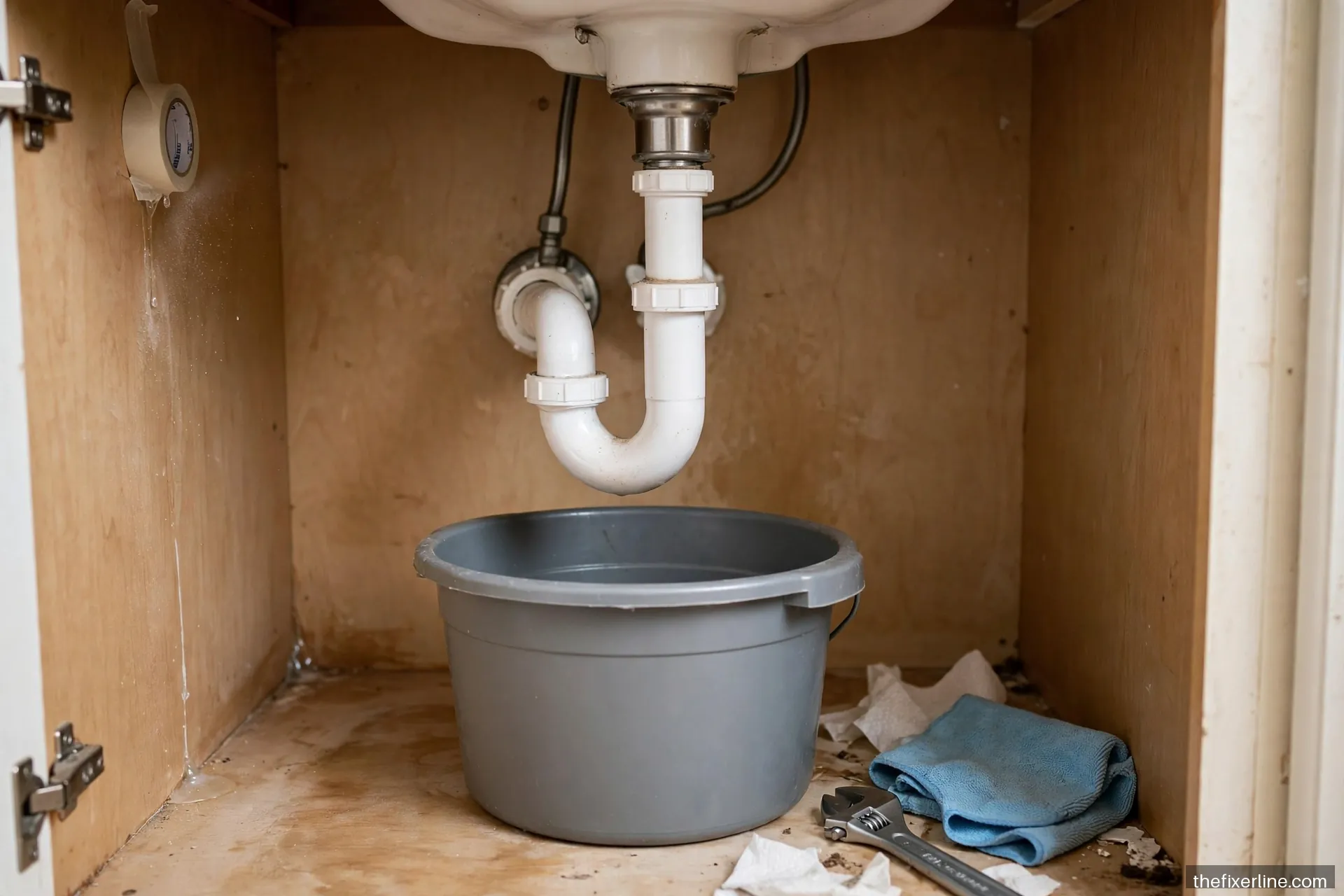
The P-trap is the U-shaped (or J-shaped) bend under your sink. It holds water to block sewer gases, and it is also where a remarkable quantity of gunk accumulates. Cleaning it directly is often the fastest fix for a stubborn sink clog.
Place a bucket under the trap. Loosen the two slip nuts (one at each end of the bend) by hand or with pliers — turn counterclockwise. Water will spill; that is what the bucket is for. Pull the trap free and dump its contents into the bucket. Scrub the inside with a bottle brush and hot soapy water, check the slip-nut washers for cracks or flattening (replace them if they look tired — they are cheap), and reassemble hand-tight plus a quarter turn with pliers.
Run the water and check both joints for drips with a dry paper towel. If a slip nut leaks after reassembly, the washer is usually the issue: disassemble, replace the washer, and try again. Persistent trap leaks are covered in more detail in our guide to stopping leaky pipe joints.
The baking soda and vinegar question
You will see this everywhere online: pour baking soda down the drain, follow with vinegar, wait, flush with hot water. Here is the honest assessment: the fizzing reaction is fun to watch but produces very little actual cleaning power — it is mostly carbon dioxide and water. It will not dissolve a real clog. What it can do is serve as a mild deodorizing maintenance flush for a drain that is already flowing. Use it that way if you like, but do not expect it to clear standing water. Mechanical methods are the real solution.
Why skip chemical drain cleaners?
Three reasons. Pipe damage: caustic cleaners (lye/sodium hydroxide) and acid cleaners generate heat and can soften PVC, corrode older metal pipes, and damage the finish on fixtures. They often do not work: if the clog is complete, the chemical just sits in a pool of water above the blockage, doing nothing — and now you have a sink full of caustic water to deal with manually. Safety: splashes burn skin and eyes, fumes irritate lungs, and mixing products (never do this) can release toxic gas. If a plumber eventually has to clear the drain, tell them chemicals were used — it changes how they handle the job safely.
Preventing the next clog
- Kitchen: never pour cooking grease down the drain — it solidifies in pipes. Wipe pans with a paper towel first, or pour cooled grease into a container for the trash. Use a sink strainer to catch food particles.
- Bathroom: a simple hair catcher over the shower drain prevents the majority of tub clogs. Clean it weekly; it takes ten seconds.
- Everywhere: run hot water for 30 seconds after each sink use to keep soap and grease moving. Once a month, fill the basin with hot water and release it all at once — the surge flushes buildup better than a slow trickle.
When to call a licensed plumber
Stop DIYing and call a pro if: multiple fixtures are slow or backing up (main line); sewage odors or actual sewage backup appear; you hear gurgling from drains when other fixtures run; the same drain clogs again within days of clearing (suggests a deeper obstruction, root intrusion, or a damaged pipe); or you suspect the clog is beyond your 25-foot auger’s reach. Also call if your home has a septic system and you are unsure — septic-safe practices differ, and a pro who knows your system is worth it. Chemical cleaners are particularly risky for septic systems, which is one more reason to stick with mechanical methods.
Frequently asked questions
Can I use a plunger on a garbage disposal drain?
Yes, but first make sure the disposal is switched OFF, and never put your hand down the drain. Plunge gently — the disposal’s internal seals do not love violent pressure. If plunging does not help, the issue may be the disposal itself; see garbage disposal troubleshooting.
How often should I clean my drains preventatively?
Hair catchers: weekly. A hot-water flush: monthly. Full P-trap cleaning: only when needed — if the drain flows well, leave it alone. Preventative snaking of a healthy drain is unnecessary and risks scratching pipes.
Are these methods safe for septic systems?
Yes — mechanical methods are the safest option for septic systems. Avoid chemical cleaners entirely with septic, and go easy on antibacterial soaps, which can disrupt the bacterial balance your septic tank depends on.
My house has very old pipes. Should I still snake?
Be cautious. Old galvanized steel pipes corrode from the inside, and aggressive snaking can punch through a weakened section. If your pipes are 50+ years old and you have never had them inspected, a plumber’s camera inspection is a smarter first step than a DIY auger.
What to read next
Clogs and leaks often travel together: how to fix a leaky faucet covers the other most common sink repair, and caulking 101 shows how to reseal around sinks and tubs once the plumbing is sorted.
Safety note: This article is general information, not professional contractor advice. Never mix chemical cleaners, never put your hand in a garbage disposal, and call a licensed plumber for main-line issues or sewage backups.